
Types of Kraft Papers & Its Uses
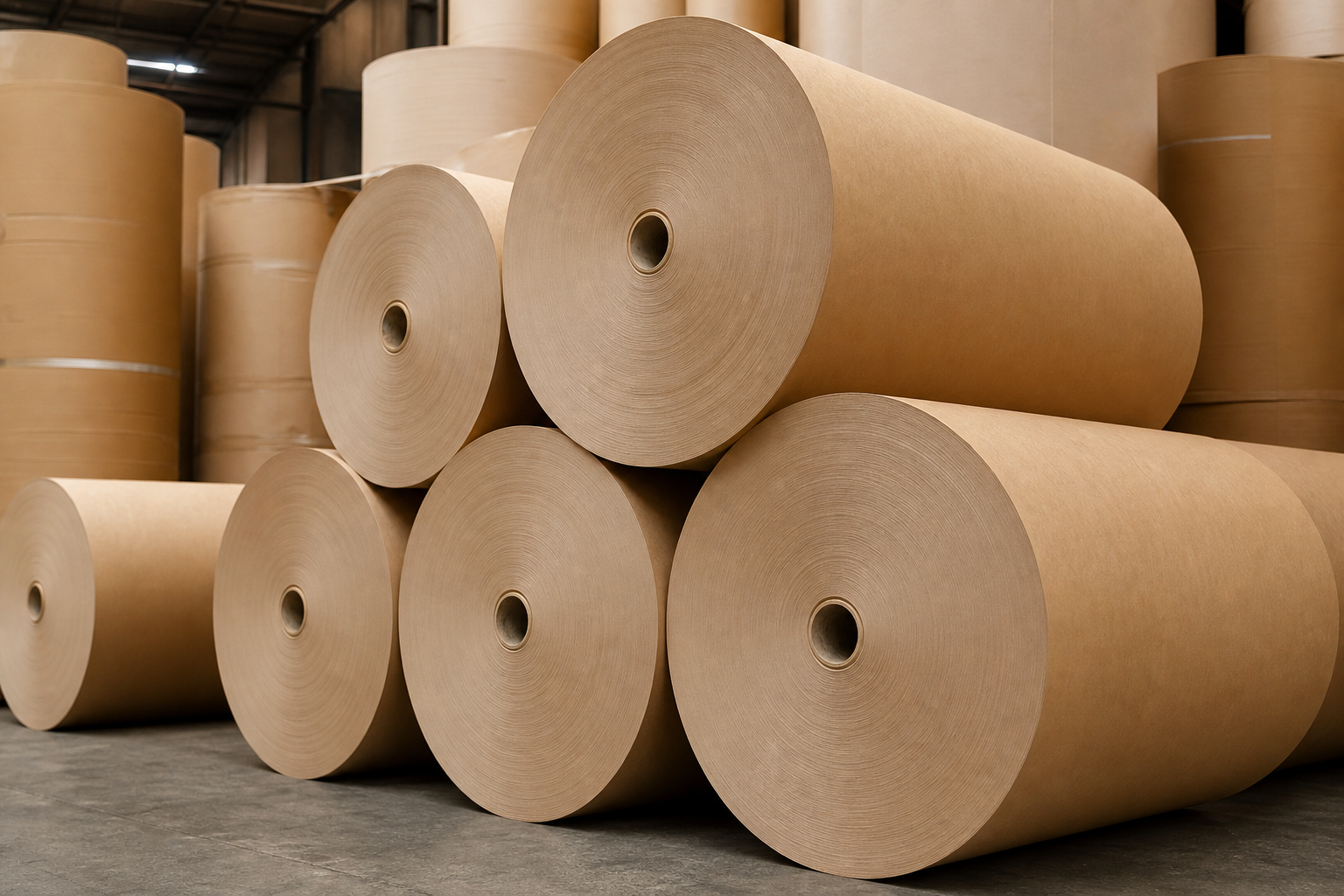
Although kraft paper is widely known for bags and wrapping, it is a core structural material for corrugated boxes, export cartons, and industrial packaging. Understanding the types available helps buyers match grade, shade, and strength to their converting line—and avoid costly trial-and-error at the corrugator.
What is kraft paper?
Kraft paper is produced through the sulfate (kraft) pulping process, which removes lignin while preserving long cellulose fibres. That fibre length is what gives kraft its reputation for tensile strength and tear resistance. Unbleached grades appear light to medium brown; bleached grades are white and used where print contrast or food-contact aesthetics matter.
At Nexa Papers LLP in Morbi, Gujarat, we manufacture craft paper (kraft-style packaging grades) in natural and golden shades, with burst factor from 12 BF to 20 BF and basis weight from 90 GSM to 180 GSM. Our rated capacity is 150 MT per day, supporting programme buyers who need consistent reel supply rather than spot lots only.
Natural (virgin) kraft
Natural kraft—often called virgin kraft when produced from fresh fibre—offers high tensile strength, good tear resistance, and predictable performance on high-speed corrugators. It is the default choice for:
- Corrugated medium and liner in agri-cartons, industrial transit boxes, and e-commerce shippers
- Wrapping and protective layers for machinery, glassware, and engineering goods
- Applications where moisture resistance and board stiffness must be maintained through the supply chain
Natural shade from our mill has a neutral brown tone that suits both plain board and printed liners. See our natural shade craft paper page for typical specifications and enquiry options.
When natural shade is the better fit
Choose natural shade when cost efficiency, maximum strength per GSM, or compatibility with standard brown board programmes is the priority. Many export carton buyers specify natural medium with a golden liner only on the printable face—your combination depends on brand and destination market norms.
Recycled kraft and mixed fibre
Recycled kraft incorporates post-consumer or post-industrial fibre. It supports circular packaging goals and can meet buyer sustainability targets, though strength and shade consistency require tighter process control than virgin-only furnishes.
Recycled content affects burst factor, ring crush values, and how the sheet runs on the corrugator (moisture pick-up, warp, and glue consumption). We discuss fibre strategy openly on our Go green page. If your brand mandates recycled fibre, share your target BF/GSM and we will confirm which grades from Morbi align.
Golden shade kraft
Golden shade kraft carries a warmer, more uniform brown tone than natural shade. It is favoured where the carton face is customer-visible—FMCG, appliances, footwear, and retail-ready packaging.
Golden shade does not automatically mean lower strength; at Nexa Papers, golden and natural grades are produced within the same BF and GSM bands so you can switch shade without redesigning the entire board combination—subject to trial on your line.
Explore golden shade specifications and request swatches before locking a retail-facing programme.
Specialty and coated variants (industry context)
Beyond standard packaging kraft, the wider market includes grease-resistant, PE-laminated, and ribbed kraft for bags and food service. We focus on craft paper for corrugated and industrial packaging; if your requirement is outside our shade/BF/GSM range, our marketing desk can indicate whether a custom trial is feasible or refer you to a complementary supplier.
How to specify kraft for your application
When approaching a mill, provide:
- End use: medium, liner, or combination; single-wall vs double-wall
- Target BF and GSM (or board ECT/BCT if you work backwards from box performance)
- Shade: natural, golden, or mixed programme
- Reel width and diameter limits for your corrugator and warehouse
- Monthly volume and dispatch rhythm (FTL, part-load, export stuffing dates)
Our operations team in Morbi coordinates trials and production slots with on-site loading support. Contact marketing or operations with your specification sheet for a written grade confirmation.
Conclusion
Kraft is not a single commodity—shade, BF, GSM, and fibre mix all influence box cost and performance. Map your corrugator capability and customer expectations first, then match a mill grade that can hold those targets shipment after shipment. Share your requirements with Nexa Papers and we will recommend natural or golden shade craft paper from our Morbi facility.